

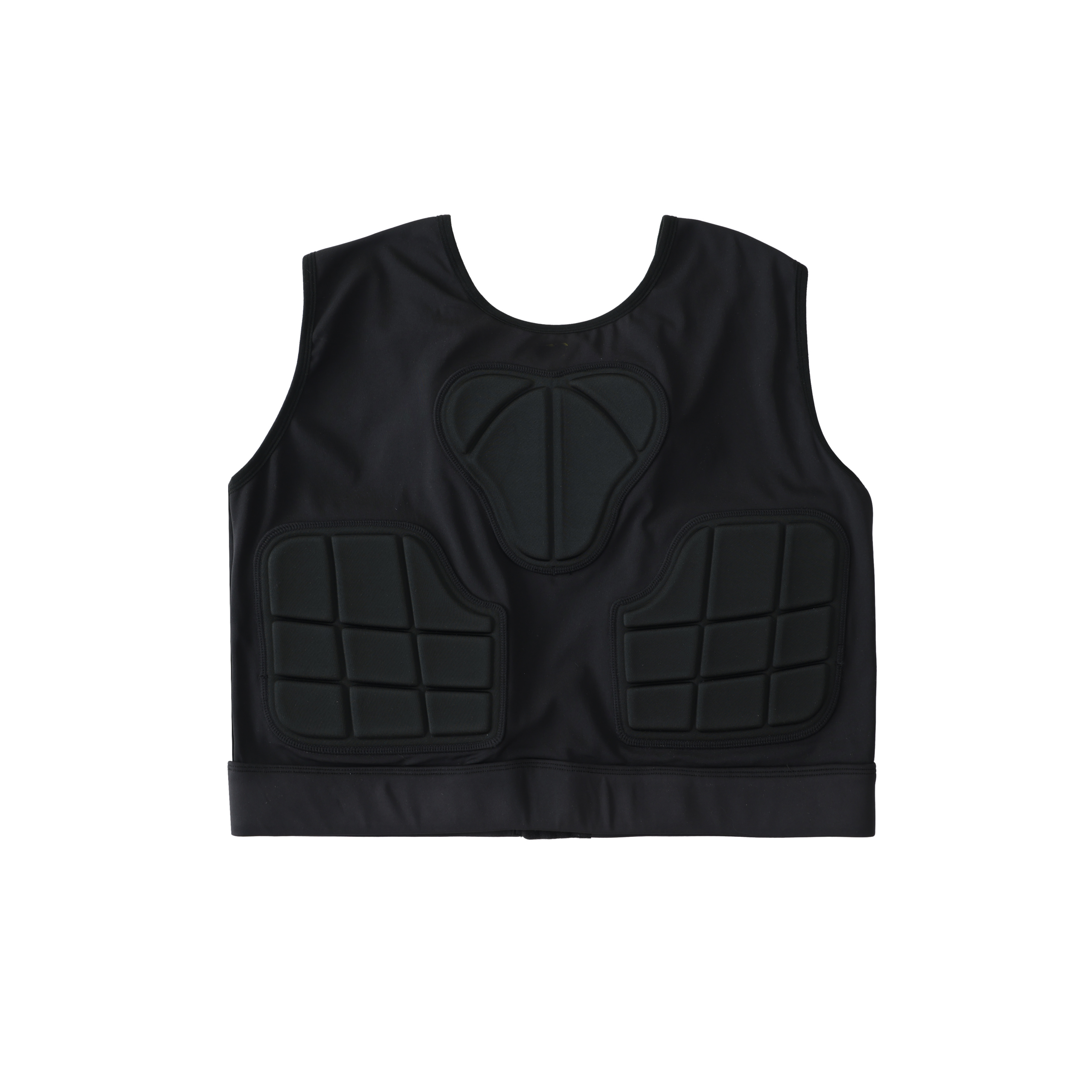
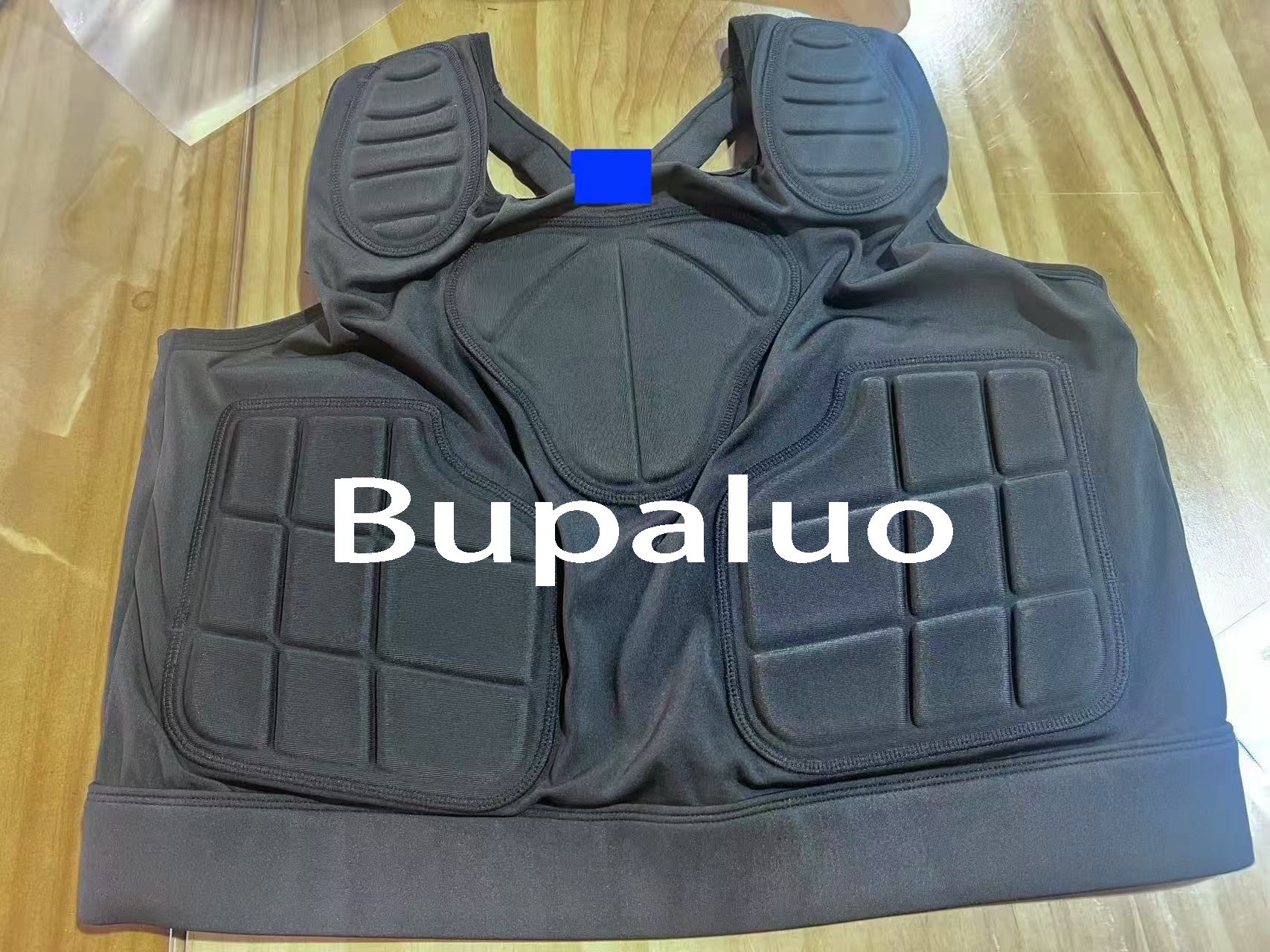
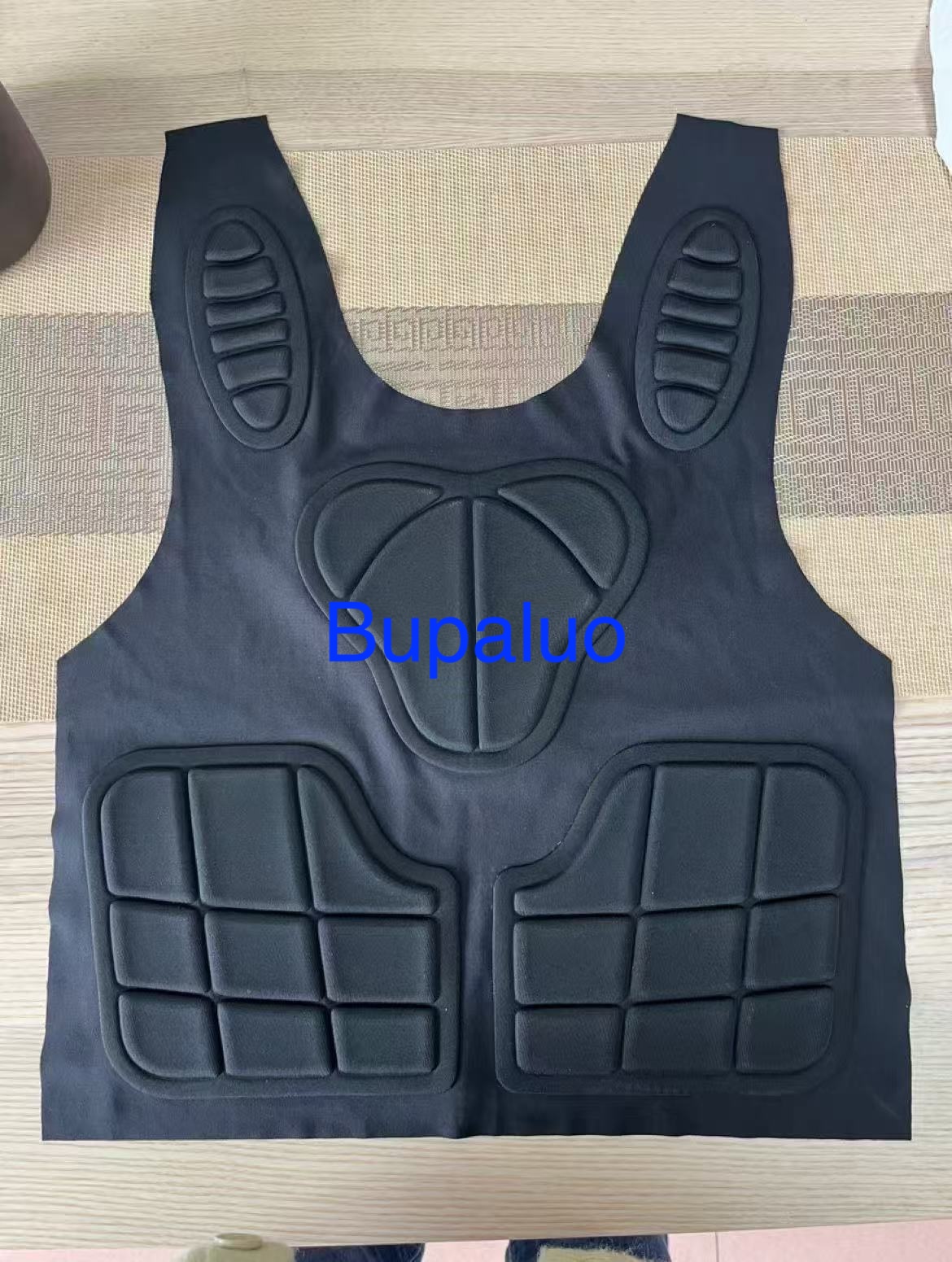
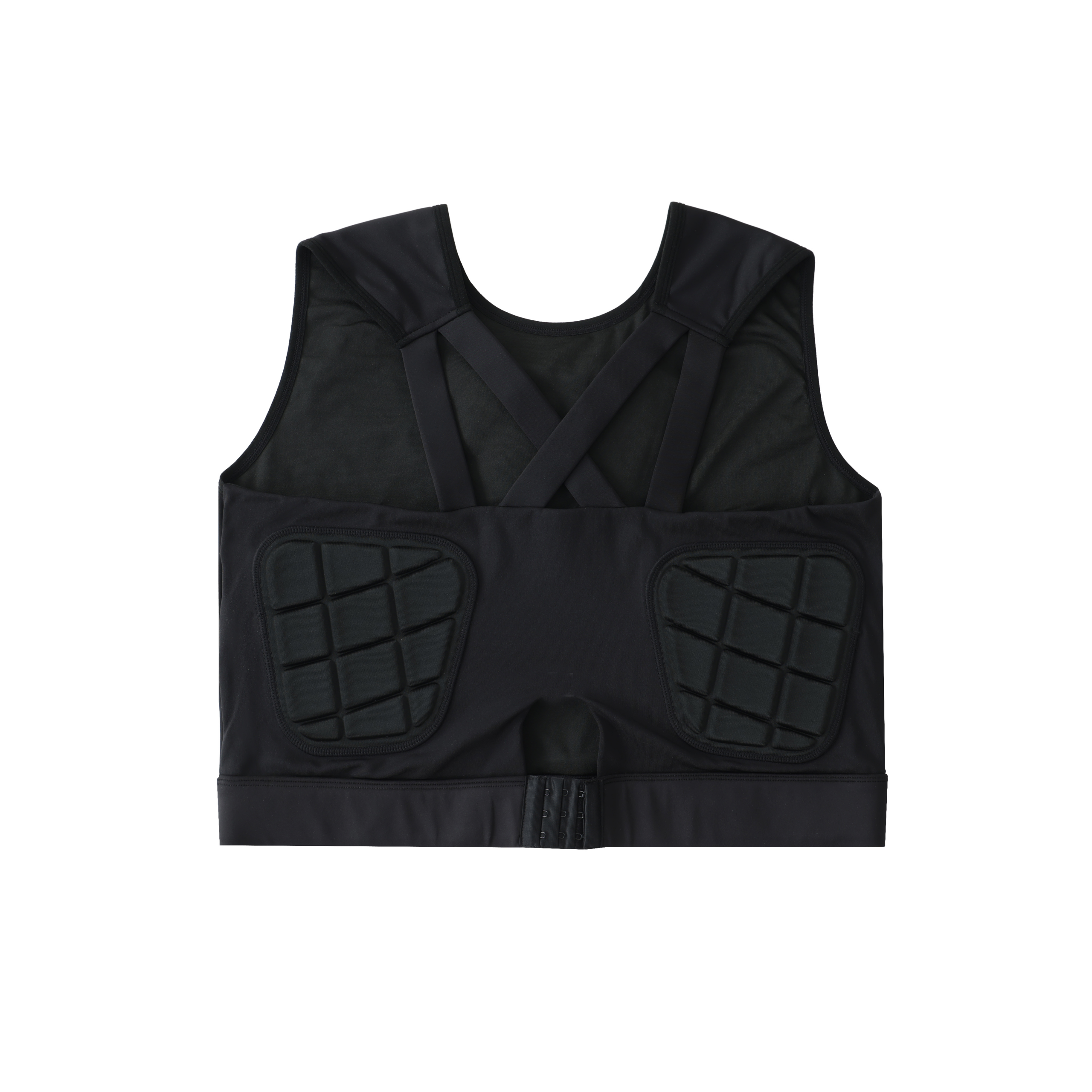
Fabric: 75% nylon,25% spandex,220g
Filling: XRD foam
Weight: 0.25kg
Sample time :15-20 days
Deliver time : 30 days after PP sample confirmed
Packaging: 1pcs/pe packbag
Pcs/carton :20pcs/carton
Carton size: 60*40*30
Gross weight:8kg/carton
Net weight: 7kg/carton
Description
The core difficulty in the production process of this sports collision tights (such as basketball / football collision vests) is the balance of protection, comfort and durability, which is reflected in the following aspects:
1. Multi-material composite and bonding processes
· Material compatibility challenge: The main body is high-elastic tight fabric (such as polyester + spandex), and the protective module is EVA / PU foam or gel. The material differences between the two materials make it difficult for ordinary glues to achieve a strong and lasting bonding.
· High adhesion accuracy requirements: The foam modules need to be precisely positioned in key protective areas such as the chest, ribs, and shoulders, and must completely fit with the body curve.When the heat pressure or film is applied, the temperature, pressure, and time control are slightly deviations, which will cause the foam to deform, the fabric to wrinkle, or bubbles to appear.
· The contradiction between elasticity and strength: tight fabrics require high elasticity, while foam cotton cannot limit the stretch of the fabric after it is spliced.This requires the adhesive itself to be elastic, and the bonding strength to be able to withstand repeated stretching and machine wash to avoid layered opening.
2. Modeling and design of foam modules
· 3D molding: In order to fit the body, the foam module requires complex 3D hot pressing, such as multi-partition, multi-crease design.Mold accuracy and heat and pressure parameter control directly affect the fitability and buffering effect of the module.
· Balance of protection and lightweighting: Too low foam cotton density is insufficient protection, too high is thick and burdensome. The weight needs to be reduced as much as possible while ensuring impact resistance through material formulation and structural design.
· Air permeability and durability: The foam itself is not breathable and requires the design of air vents or the use of open-porous foam on the module, which in turn weakens its structural strength and durability.
3. Typography and sewing processes
· Accurate compression adhesion: Different sizes require separate compression layout designs to ensure uniform pressure support for different body shapes without compromising movement freedom.
· Special stitching techniques: To reduce friction and foreignness, special processes such as flattening or cladding are often used, and the stitches must be highly elastic and wear resistant, with the ability to withstand high levels of motion and repeated washing.
· Consistency of mass production: In large-scale production, it is necessary to ensure that the position of bubble cotton, the bonding strength and the compression effect of each product are highly consistent, and extremely high requirements are put into the production process and quality control.
4. Endurance and testing standards
· Fatigue testing: Products need to pass tens of thousands of joint activity simulations and machine wash tests to ensure that the foam does not fall off, the fabric does not balloon, and the seams do not crack.
· Safety and Environmental Compliance: Adhesives and fabrics need to meet strict environmental and safety standards to avoid the residual of harmful substances while maintaining stable performance in high temperature and humidity environments.
Only logged in customers who have purchased this product may leave a review.
Reviews
There are no reviews yet.